
Key Takeaways
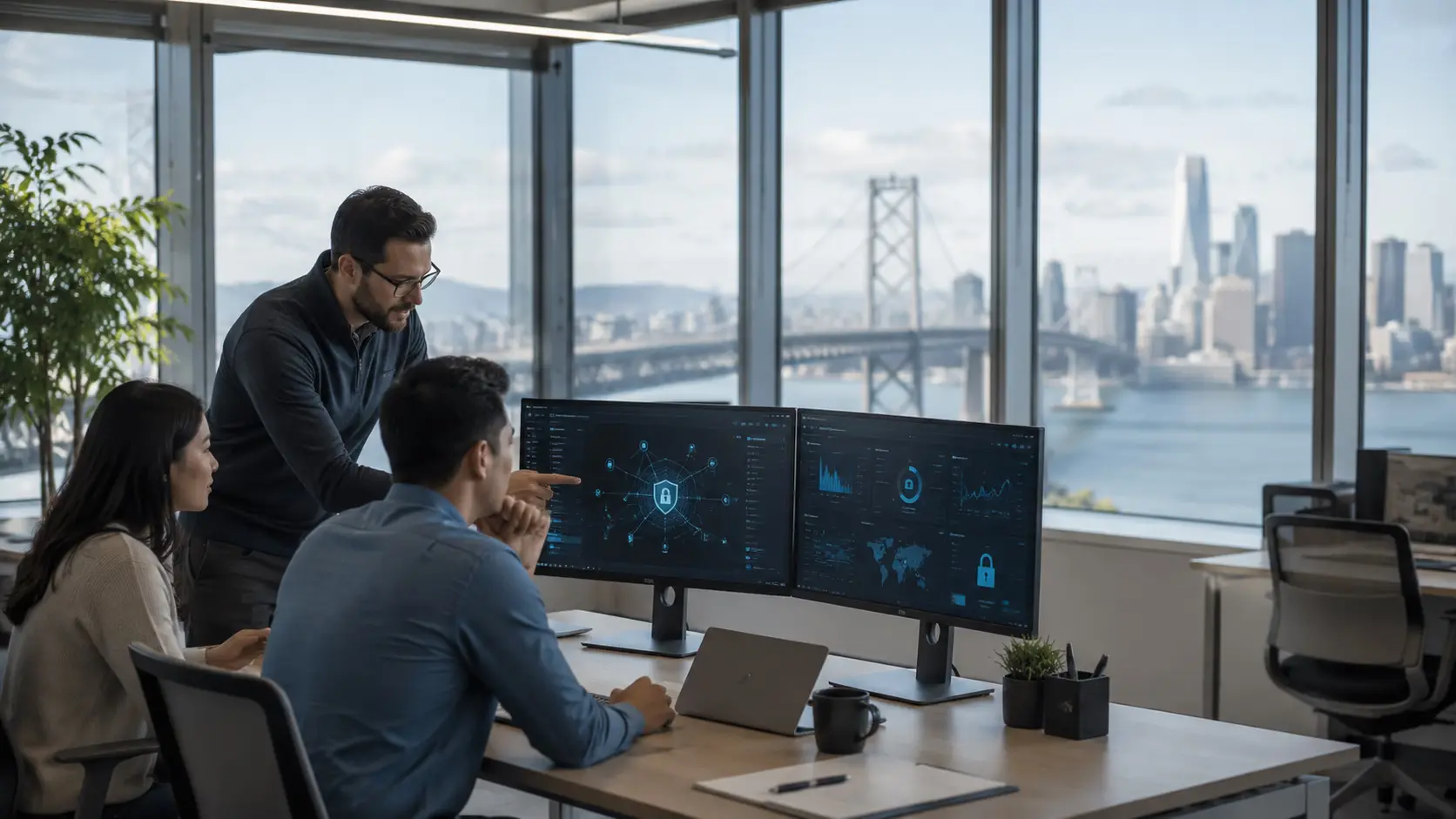
- Managed cybersecurity services allow organizations to outsource their cyber protection to a third-party vendor, which monitors and manages cybersecurity systems remotely, giving Bay Area businesses 24/7 protection so they can focus on operations and business growth.
- Computer Experts Corporation (CEC) has delivered IT and cyber security services in San Jose and the wider Bay Area since 1988, specializing in small and mid-sized businesses with 5–50 endpoints.
- Modern managed cybersecurity combines endpoint protection, endpoint detection and response (EDR), extended detection and response (XDR), backup, and user training to defend digital assets from today’s top cyber threats.
- Investing in managed security services can be more cost-effective than managing cybersecurity internally, as MSSPs often provide a flat monthly rate for services—especially given the global shortage of 3.5 million cybersecurity professionals.
- Request a free initial consultation with CEC to assess your current cybersecurity posture and specific risk exposure.
What Are Managed Cybersecurity Services?
Managed cybersecurity services are ongoing, outsourced cyber security services that handle continuous monitoring, threat detection, incident response, and security management across networks, servers, cloud environments, and endpoints. These services are delivered by a managed security service provider (MSSP) or a managed IT service provider with strong security capabilities—like CEC—operating as an extension of your team.
The provider must offer round-the-clock, continuous monitoring to detect and mitigate threats in real-time. Core functions include:
- 24/7 security monitoring and log analysis
- Endpoint protection and vulnerability scanning
- Extended detection and response capabilities
- Backup and disaster recovery management
- Security awareness training for employees
The global Managed Security Services market is projected to grow from $39.7 billion in 2025 to $66.83 billion in 2030, reflecting a compound annual growth rate of 11.15%. This growth reflects how AI-driven cyber threats and remote work since around 2020 have pushed even small Bay Area firms to adopt managed cybersecurity services.
For most SMBs, managed cybersecurity is part of a broader managed IT services relationship that also covers network infrastructure, server management, and cloud services.
Why Bay Area SMBs Need Managed Cybersecurity Now
High-value tech startups, healthcare practices, and professional services firms throughout the San Francisco Bay Area are prime targets because of the sensitive digital assets they hold. Client data, financial records, intellectual property, and protected health information make these organizations magnets for attackers.
The most common cyber threats facing small and mid-sized businesses today include:
- Phishing and business email compromise (BEC)
- Ransomware attacks (global payments exceeded $1.1 billion in 2025)
- Credential theft via dark web dumps
- Attacks against remote access points and cloud accounts
A successful breach can cause days of downtime, lost revenue, legal exposure, and lasting reputational damage. For an accounting firm handling client financials or a clinic managing patient records, the consequences extend far beyond immediate costs.
MSSPs identify vulnerabilities before they are exploited and provide rapid incident response to minimize downtime during a security incident. Attackers increasingly automate scanning for vulnerable systems, so even a 15-person office with a misconfigured firewall or outdated endpoint protection can be hit.
Managed cybersecurity services give these organizations enterprise-grade protection without hiring an in-house security team.

Managed Cybersecurity vs. In-House Security
The core tradeoff is straightforward: in-house security offers direct control but demands specialized staff, advanced tools, and 24/7 coverage. Managed cybersecurity services shift much of that responsibility to a partner under contract, with established toolsets and policies already in place.
What in-house typically looks like for a 10–50 employee business:
A generalist IT person or small team juggles support tickets, projects, and security on the side. They often lack dedicated security operations center tools, achieving 60-70% patch compliance with reactive response times of 24-48 hours.
What a managed cybersecurity provider like CEC brings:
Mature toolsets, documented processes, alert triage, incident runbooks, and service level commitments for rapid response capabilities—often under 30 minutes for critical incidents.
Key differences:
- Responsibility level: Managed cybersecurity services typically offer lower internal responsibility compared to in-house security, which requires higher internal responsibility for managing security operations
- Cost structure: In-house cybersecurity solutions generally incur higher costs due to the need for dedicated staff, tools, and policies, while managed services provide predictable monthly fees
- Access to expertise: MSSPs employ certified cybersecurity professionals; in-house often relies on generalists
- Speed to implement: Managed services come with established toolsets and policies, allowing faster deployment than building from scratch
A hybrid model is common: internal IT manages day-to-day user support while an MSSP handles 24/7 monitoring, threat hunting, and incident response.
For most Bay Area SMBs, fully in-house cybersecurity remains unrealistic in 2026 due to budget constraints and hiring challenges—cybersecurity roles take 3-6 months to fill amid a 4.7 million vacancy gap globally.
Core Components of Managed Cybersecurity Services
This section outlines the main building blocks of a modern managed cybersecurity program and how they work together to strengthen your cybersecurity posture.
Key components include endpoint protection, endpoint detection and response (EDR), extended detection and response (XDR), network and firewall security, email and web security, identity and access management, backup and disaster recovery, and security awareness training.
Managed Detection and Response (MDR) services provide 24/7 monitoring and response to cyber threats, combining technology with human expertise to proactively detect and neutralize threats before they can disrupt operations. All of these elements should be integrated—not siloed—so that threat detection in one layer can trigger automated or analyst-driven response at another.
Endpoint Protection and Endpoint Detection & Response (EDR)
Endpoints—laptops, desktops, and mobile devices—are often the first entry point for attackers, making robust endpoint protection essential for any organization’s systems.
Traditional endpoint protection (antivirus, anti-malware, host firewall) blocks known threats using signatures. Endpoint Detection and Response (EDR) services allow for real-time monitoring and collection of endpoint data, enabling automated responses to suspicious activity and enhancing overall endpoint security. EDR catches unknown or fileless attacks by monitoring behavioral anomalies like unusual PowerShell execution.
A managed provider deploys and manages EDR agents across all company devices, monitors alerts around the clock, and remotely isolates compromised endpoints when needed. For a Bay Area accounting firm, this might mean stopping ransomware on a bookkeeper’s workstation before encryption begins, or detecting suspicious activity on a remote employee’s laptop.
CEC combines endpoint protection with centralized logging and policy management so updates and security policies are enforced consistently across all systems.
Extended Detection and Response (XDR)
Extended Detection and Response (XDR) integrates multiple security products into a unified solution, providing comprehensive visibility and automated response capabilities across various environments, including endpoints and networks.
XDR reduces noise by correlating multiple low-level security events—such as a suspicious login plus unusual file access plus an endpoint alert—into a single, high-priority incident. This helps your security team focus on real threats rather than chasing false alarms.
A managed cybersecurity team uses XDR to perform proactive threat detection and speed up investigations by seeing activity across the entire IT environment. For small and mid-sized businesses, XDR is usually delivered as a service, so they benefit from advanced analytics without purchasing and running the platform themselves.
XDR strengthens overall cybersecurity posture, especially in mixed on-premises and cloud setups common among Bay Area organizations.
Network, Firewall, and Remote Access Security
Firewalls, secure Wi-Fi, and remote access controls protect the perimeter and internal network traffic, even as more work moves to cloud infrastructure.
Managed firewall services include:
- Configuration and policy tuning
- Intrusion detection and intrusion prevention
- VPN or secure remote access setup
- Continuous monitoring for suspicious network traffic
For example, a managed service might block repeated login attempts from overseas IP addresses targeting a Bay Area accounting firm’s network in real time.
Modern approaches like zero trust network access grant minimum necessary access to applications instead of exposing entire networks. CEC can also assist with segmenting networks for sensitive systems—separating medical devices, point-of-sale systems, or financial databases from general office traffic.
Email, Web, and Identity Protection
Many successful cyber attacks start with phishing emails, malicious links, or stolen credentials, making email, web, and identity protection critical layers of defense against digital threats.
Managed email security includes:
- Advanced spam and phishing filters
- Attachment and URL scanning
- Anti-spoofing controls (SPF, DKIM, DMARC)
- Integration with Microsoft 365 or Google Workspace
Web security features DNS filtering, blocking access to known malicious domains, and enforcing safe browsing on corporate security devices.
Identity and access management controls include multi-factor authentication (MFA), conditional access policies, and least-privilege account design. Even if an employee falls for a phishing email, MFA and conditional access can prevent account takeover by blocking login attempts that don’t meet security requirements.
Organizations operating in highly regulated sectors, such as financial services and healthcare, must secure their data and systems according to industry standards to avoid compliance penalties that can damage their reputation.
Backup, Disaster Recovery, and Business Continuity
Even with strong endpoint and network defenses, businesses need backup and disaster recovery to survive ransomware or hardware failures. Data breaches and ransomware attacks can render organization’s data inaccessible within minutes.
Managed services handle scheduled backups for servers, cloud data (Microsoft 365 mailboxes, SharePoint), and critical workstations—with both onsite and offsite copies where appropriate. Immutable or versioned backups prevent ransomware from encrypting or deleting recovery copies.
Regular test restores confirm recoverability. Realistic recovery time objectives for small businesses typically mean restoring core systems within hours rather than days.
Managed security compliance services help organizations navigate complex regulatory requirements, ensuring they meet standards like HIPAA, GDPR, and PCI DSS, which minimizes legal and financial risks. Reliable business continuity planning allows owners to take on new clients and projects without fearing catastrophic data loss.
Security Monitoring, Threat Intelligence, and Incident Response
Continuous security monitoring is at the heart of managed cybersecurity services, turning raw logs into actionable security intelligence and early warnings about potential threats.
Managed Security Information and Event Management (SIEM) services provide centralized visibility into security events by collecting and analyzing logs from across an organization’s systems, helping to identify and respond to threats effectively. Security Operations Center as a Service (SOCaaS) offers organizations the capabilities of a full-scale security team without the overhead of building one.
Threat intelligence involves the collection and analysis of data regarding potential or current cyber threats, which helps organizations understand the risks they face and how to mitigate them. Managed security service providers utilize advanced threat intelligence to enhance their cybersecurity measures, allowing them to proactively identify and respond to evolving cyber threats.
A typical incident response workflow follows these steps:
- Incident detection and initial alert
- Triage to assess severity
- Containment (isolating security devices, blocking accounts)
- Eradication (removing malware, closing vulnerabilities)
- Post-incident review and continuous improvement
CEC provides clear communication during security incidents, explaining what happened in plain English, what was done, and what steps will prevent a repeat.
User Awareness Training and Policies
Technology alone cannot block every attack. Employees must be trained to recognize and avoid social engineering and phishing attempts that target human vulnerabilities.
Recurring security awareness training tailored to non-technical staff focuses on:
- Spotting suspicious emails and reporting security issues promptly
- Safe password practices
- Proper handling of sensitive data
Simulated phishing campaigns measure and improve employee readiness in a low-risk way—organizations typically see 50% reduction in clicks after several campaigns.
Basic but important security policies include acceptable use guidelines, remote work protocols, and incident reporting procedures that CEC can help document and roll out. Well-trained staff significantly reduce successful attacks and false alarms, strengthening overall cybersecurity posture.
How Managed Cybersecurity Services Improve Your Cybersecurity Posture
Cybersecurity posture refers to the overall strength of an organization’s defenses, policies, and readiness to prevent, detect, and respond to cyber threats. A strong cybersecurity posture means fewer security threats succeed and faster recovery when incidents occur.
Managed services improve posture through:
- Standardized controls across all existing systems
- Continuous monitoring and threat monitoring
- Faster detection and rapid response
- Clear security policies and governance
- Regular security assessments and unified threat management
By leveraging threat intelligence, organizations can improve their cybersecurity posture, enabling them to detect and respond to threats more effectively and efficiently.
CEC typically starts by assessing the current environment—networks, servers, endpoints, cloud apps—and identifying gaps compared to best practices and regulatory compliance requirements.
Example improvement journey: A 20-person manufacturing firm moves from ad hoc antivirus and local backups to centrally managed endpoint protection, MFA, offsite backups, and 24/7 outsourced monitoring over 90 days—boosting security maturity scores by 40%.
By partnering with a managed security service provider, organizations can enhance their compliance posture through expert guidance, robust controls, and automated compliance documentation, allowing them to focus on growth rather than paperwork.
Posture is not a one-time project but an ongoing process, with periodic reviews to adjust to new cyber threats, technologies, and compliance requirements.
Cost, Value, and ROI of Managed Cybersecurity for SMBs
Many owners worry about cyber security costs, but the cost of a serious incident—regulatory fines, downtime, lost clients—often far exceeds the investment in managed services.
Most managed cybersecurity clients pay between $5,000 and $20,000 or more per month, depending on factors such as organizational size and specific needs. MSSP pricing models typically fall into two categories: per-user pricing and data volume tiers, which can significantly influence overall costs.
Factors affecting pricing include:
- Number of endpoints and users
- Complexity of the IT environment
- Industry regulations (HIPAA, PCI-DSS, financial rules)
- Service depth (monitoring only vs. full MDR/XDR)
Managed cybersecurity services are billed as predictable monthly fees, allowing easier budgeting compared to hiring and retaining an in-house security team. The average SMB breach costs $25,000-$100,000 when factoring forensic work, overtime, data recovery, and reputational damage—often exceeding a full year of managed service fees.
CEC offers a free initial consultation to scope needs and provide a transparent estimate aligned with your risk tolerance and growth plans.
Onboarding with a Managed Cybersecurity Provider Like CEC
Onboarding should be a structured, low-disruption process—not a painful rip-and-replace of everything you have.
MSSPs typically onboard new clients in four separate phases: Envision and Align, Build and Prepare, Launch and Refine, and Optimize and Grow.
Assessment and planning covers hardware, software, cloud services, existing backups, user roles, and any known pain points or recent security incidents. During the onboarding process, an MSSP will explain what they will need to do to complete the onboarding and prepare the staff for what to expect throughout the process.
Deployment includes:
- Installing endpoint protection and EDR agents
- Enabling centralized logging and event management
- Updating firewall rules
- Setting up backup jobs and MFA where missing
Constant communication is maintained by the MSSP throughout the onboarding process to protect against disruptions that could put the organization at risk.
During the first few weeks, alerts are tuned to reduce noise, and CEC works closely with the client’s leadership or in-house IT to refine response procedures. Ongoing communication includes monthly or quarterly security reports, review meetings, and recommendations as the business and threat landscape evolve.

How Managed Cybersecurity Supports Business Growth
Cybersecurity serves as an enabler of business growth rather than just a cost center—especially for firms that want to win larger clients or enter new regulated markets.
A strong cybersecurity posture and documented controls help pass vendor security questionnaires, cyber insurance reviews, and compliance audits, unlocking new opportunities. Many enterprise clients now require vendors to demonstrate managed compliance and security consulting capabilities before signing contracts.
Predictable, managed cyber security services free leadership and staff to focus on innovation, customer service, and expansion instead of constantly reacting to IT fires. The services should grow with a company, providing flexible solutions that adapt to new threats and business expansion.
As your business adds employees, locations, cloud applications, or remote workers, a security service provider like CEC can scale endpoint protection, monitoring, and access controls without major disruption. Evaluate the provider’s ability to handle identity and access management (IAM) and their effectiveness in disaster recovery and business continuity.
Think of managed cybersecurity as a long-term partnership that grows with your organization rather than a one-time project.
Choosing the Right Managed Cybersecurity Partner
Not all cybersecurity services providers are equal. SMBs should evaluate both technical capabilities and cultural fit when selecting a partner.
Key considerations when choosing managed cybersecurity services include documented compliance with regulations, clear Service Level Agreements (SLAs), and the ability to scale services to align with business growth.
Selection criteria:
- Local presence and familiarity with Bay Area business needs
- Breadth of services (IT plus cybersecurity under one roof)
- 24/7 security operations and response capabilities
- Proven incident response experience with clear communication
- Security expertise across your specific industry
Ask about specific tools and platforms used (EDR/XDR, SIEM, backup solutions) and how those integrate with your existing systems. Industry knowledge matters—understanding HIPAA for healthcare practices or privacy expectations for accounting firms ensures appropriate controls.
CEC’s long history in San Jose since 1988, combined with both managed IT and cybersecurity expertise, provides continuity and a single point of accountability for clients.
Schedule a conversation or security assessment to see if CEC’s approach matches your needs and risk profile.
FAQ: Managed Cybersecurity Services
Do small businesses in the Bay Area really need managed cybersecurity, or is antivirus enough?
Basic antivirus alone is no longer sufficient. Cyber threats continue to evolve, and attackers now use phishing, credential theft, and cloud account compromise that traditional tools miss—studies show antivirus misses up to 70% of modern attacks. Even small firms with 5–10 employees hold valuable digital assets that require protection. Managed cybersecurity services provide layered defenses, security expertise, and 24/7 monitoring that individual tools cannot deliver on their own.
How long does it usually take to get started with managed cybersecurity services?
Most small and mid-sized organizations can complete core onboarding—assessment, deployment of agents, and basic monitoring—in two to six weeks, depending on size and complexity. Some protections like enabling MFA or deploying endpoint agents can be implemented within days for critical systems. Fine-tuning alerts and optimizing security policies is an ongoing process, typically refined over the first 60–90 days of service.
Can we keep our existing IT provider or internal IT person if we add managed cybersecurity?
In many cases, yes. Managed cybersecurity services are designed to complement internal IT staff or existing IT support, not necessarily replace them. Responsibilities can be divided, with internal IT focusing on day-to-day user support and business applications while the managed security team handles security operations, threat detection and response, and security incidents. CEC can work collaboratively with current IT resources to avoid overlapping efforts and clarify roles.
What industries does CEC support with managed cybersecurity services?
CEC typically serves accounting and professional services firms, healthcare practices, manufacturing and light industrial companies, and other small to mid-sized organizations in the San Francisco Bay Area. CEC also supports home offices and residential clients needing secure networks and reliable backups. Controls and security policies are tailored to the specific regulatory requirements and privacy expectations of each industry.
What’s the first step if we’re unsure about our current cybersecurity posture?
Begin with a structured cybersecurity assessment that reviews networks, endpoints, servers, cloud apps, backups, and user practices. CEC offers a free initial consultation to discuss current concerns, recent security events, and business priorities, then recommend next steps based on risk. Gather basic information beforehand—number of users and devices, key applications, any compliance support needs—to make the conversation more productive.